
 NOW SERVING SAN DIEGO & SURROUNDING AREAS


Quick Takeaways
- Short cycling occurs when your air conditioner turns on and off before completing a normal cooling cycle.
- Failing to address short cycling can lead to high energy bills, major repairs, or possible system failure.
- Common causes of short cycling include minor issues like a dirty air filter or blocked vents, as well as major issues such as electrical problems or an improper AC system size.
Your AC Starts, Stops, Then Starts Again
When your air conditioner keeps starting, stopping, and restarting before completing a normal cooling cycle, it’s a condition known as short cycling. If your AC is short cycling, understanding why it happens and when to call a professional repair service is vital to combat the summer heatwaves in Southern California. The experts at Comfort Bros have insight into what this means, why it happens, and steps you can take to keep your home as cool and comfortable as possible when summer temperatures strike.
What It Means When Your AC Keeps Turning On and Off
Summer in El Cajon, CA, and the surrounding areas starts in late June and extends through September, so you need a reliable air conditioner to keep your home cool. When your AC keeps turning on and off in rapid cycles, it’s a serious issue that needs attention. If you don’t address short cycling, it puts serious strain on your AC, which may require extensive equipment repairs or premature system failure.
Common Causes
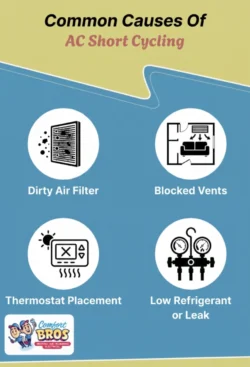
If you’re wondering why is my AC short cycling, there are several reasons why this might occur. Some causes behind your air conditioner’s short cycling are simple fixes, while others require more extensive diagnosis and repair.
Dirty or clogged air filter
If your AC turns on and off frequently, it may be due to airflow issues caused by a dirty or clogged air filter. When air can’t circulate freely through your system, heat can build up quickly, triggering the AC’s internal safety mechanism to shut down to prevent overheating.
Blocked vents or restricted airflow
Another common cause of an air conditioner short cycling is when your vents are blocked or the system has restricted airflow. Objects like furniture, area rugs, and curtains can block the registers and vents, mirroring the same problem you’d encounter with a dirty or clogged air filter.
Thermostat problems
One of the most common AC short-cycle causes is poor placement of your thermostat. If the thermostat is located near a sunny window or heat-generating appliances, it only reads the temperature near it, causing spikes that force the AC to turn off before completing the cooling cycle. Internal thermostat component failure, wiring issues, and dead batteries can also lead to short cycling.
Low refrigerant or refrigerant leak
Air conditioners need a specific refrigerant pressure to absorb indoor heat, but if there’s a leak, that pressure drops significantly, triggering the low-pressure safety switch to cut power to the compressor. As soon as the pressure levels out, the system restarts, and your AC runs for a few minutes, then shuts off again.
Frozen evaporator coils
When your AC evaporator coils freeze, the ice buildup restricts airflow and becomes an insulator. This airflow restriction triggers the system’s internal safety switches to shut the system down. As the ice thaws, your air conditioner restarts, then freezes again and shuts off as the cycle repeats.
Dirty outdoor condenser coil
The outdoor condenser coil is prone to debris buildup, and when it gets too dirty, it traps heat. If your air conditioner turns on, then shuts off repeatedly, it may be due to dirty condenser coils triggering the high-pressure safety switch.
Electrical or control board issues
Loose, damaged, or frayed electrical wiring is another common cause of AC short cycling. If your system has electrical or control board issues, the “central command system” no longer sends the continuous electrical signal required to keep the compressor or blower motors running consistently.
Oversized AC system
When you ask, “Why does my AC keep cycling on and off?” it could be due to an oversized AC system. When an air conditioner is too large for your home, it blasts cold air so strongly that it satisfies the preset temperature on the thermostat within minutes. Once the thermostat “thinks” your home is at the right temperature, it shuts off the system.
AC Short Cycling Cause Comparison Table
How to Troubleshoot Safely
Follow these tips to safely troubleshoot AC short cycling:
- Turn off your system’s power before troubleshooting your air conditioner.
- Remove and check the air filter, and replace it if it’s dirty or clogged.
- Replace your thermostat batteries and make sure it’s set to “Cool.”
- Inspect the evaporator coils for ice buildup and check the outdoor condenser for dirt and debris.
- Listen for buzzing, clicking, or chattering noises, which may indicate an electrical issue.
- Look for physical damage or oil stains on the AC refrigerant lines.
When Does AC Short Cycling Need Professional Repair?
It’s important to know when AC short cycling needs professional repair, which includes:
- Refrigerant leaks: If your AC is leaking refrigerant, a trained HVAC professional can repair the leak and refill it to restore optimal pressure.
- Oversized AC: A professional can determine whether your home has the correct AC size and make recommendations for a suitable replacement.
- Electrical issues: Trained professionals can address potentially dangerous issues such as damaged wiring and a failing capacitor or control board.
- Malfunctioning components: If short cycling is caused by a malfunctioning component, a professional can repair or replace it to remedy the issue.
Should You Keep Running an AC That Is Short Cycling?
You should not keep running an air conditioner if it’s short cycling, because it can damage your equipment even more severely over time. The sooner you recognize that your AC is short cycling, the sooner you can fix the problem before it turns into total system failure.
Repair or Replacement: How to Think About the Next Step
AC short cycling doesn’t always mean you need a replacement. Repairs make sense when you’re dealing with minor issues like low refrigerant or a clogged air filter. If your AC is short cycling after maintenance, it’s likely due to not replacing a dirty air filter or not catching and fixing minor issues early. Replacement may be worth discussing if the repairs cost 50% or more than a new system, or if your current AC is 10 to 15 years old or older.
Key Factors That Affect Repair Cost
Why AC Short Cycling Is Common in San Diego County Homes
Short cycling is common in San Diego County homes due to high summer temperatures, which can overwork systems. Salt-air corrosion and humidity in coastal homes may cause breakdowns, while inland homes in areas like El Cajon often face intense heat waves that strain systems.
Contact Comfort Bros for Professional Help Today
If the AC is short cycling in your San Diego County home, count on the pros at Comfort Bros to make it right. For more information or to schedule professional service, contact us today!
Frequently Asked Questions
How long should my AC run before shutting off?
Your AC should run for approximately 15 to 20 minutes before shutting off. If it turns off well before the 15-minute mark and then turns on again within a few minutes, it’s likely short cycling and may require professional diagnosis and repair.
Can short cycling damage my AC compressor?
Yes, short cycling can cause severe damage to an AC compressor. Repeated power surges can lead to overheating, lubrication loss, and significant mechanical strain, eventually requiring replacement.
How can I prevent short cycling?
Homeowners can prevent short cycling by replacing dirty air filters and checking for frozen coils and refrigerant leaks. Routine preventative maintenance, including inspections and tune-ups, can also help prevent short cycling.