
 NOW SERVING SAN DIEGO & SURROUNDING AREAS



Quick Takeaways
- Tankless water heater sizing is based on flow rate (gallons per minute) and the rise required to reach your target temperature.
- Households of one to two people often need a 4 to 6 GPM system, while a family of three to four requires 6 to 8 GPM.
- The experts at Comfort Bros can evaluate your household, help you find the right system for your space, and install it to provide reliable hot water when you need it most.
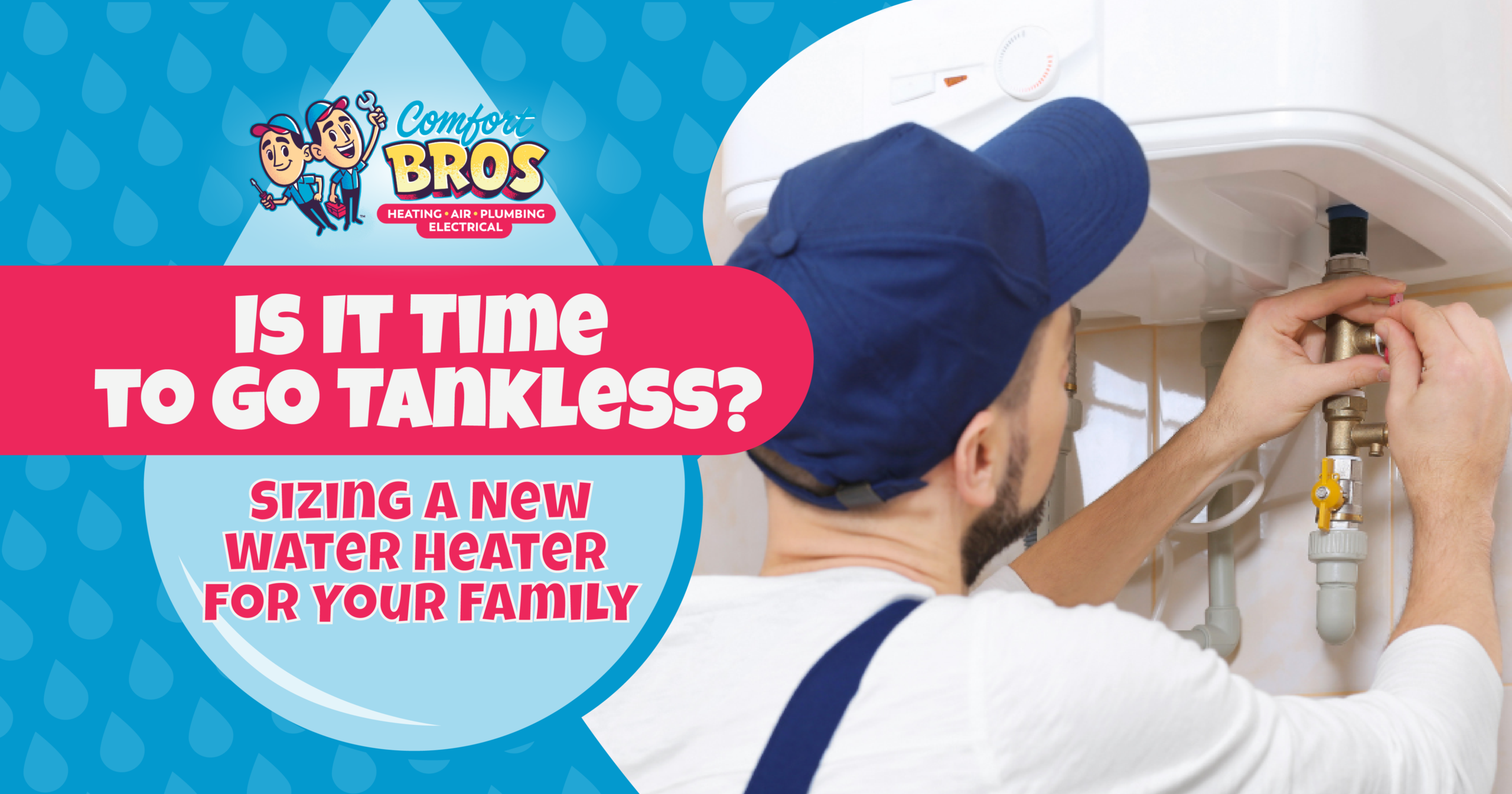
When switching to a tankless system, the right size for your home determines whether it can keep up with your household demand. To find the right size, you need to calculate the gallons per minute your household uses at one time and find a unit that can deliver that much water while raising it to the right temperature.
With San Diego’s warmer water, most El Cajon homes can also get away with a smaller unit than the same household would need in a warmer climate. Below, we’ll answer the question, “What size tankless water heater do I need?” and determine whether your home is ready for the switch.
How Is a Tankless Water Heater Sized?
Tankless sizing comes down to flow rate and temperature rise. The flow rate is the amount of hot water your home needs at once, which tankless water heaters measure in gallons per minute. The tankless water heater temperature rise is the difference between the temperature of the water entering your home and the temperature you want when it comes out of the tap, which is usually around 120°F.
Groundwater in San Diego County stays in the 60s for more of the year, so your unit only has to raise the temperature around 50 to 55 degrees. Compared to frigid Midwest winters, where the same unit has to cover a 70 to 80-degree rise, El Cajon homeowners get much closer to a unit’s full rated output.
How Much Hot Water Does Your Family Use at One Time?
Your peak hot water demand is the total of all fixtures that might run at the same time on a busy morning. Here’s a look at the average pull for household fixtures:
- Shower: 1.8 to 2.0 GPM
- Kitchen faucet: 1.5 to 1.8 GPM
- Bathroom faucet: 1.0 to 1.2 GPM
- Dishwasher: 1.0 to 1.5 GPM
- Clothes washer: 1.5 to 3.0 GPM
When calculating your demand, it’s best to plan around the heaviest-use moments of your day. For example, if it’s common for your shower, kitchen sink, and clothes washer to all be running on a busy Monday morning, the combined total of these three fixtures is your target.
What Size Tankless Water Heater Does a Family Need?
The right size of water heater depends on how many people are drawing hot water, the fixture they’re using, and how often those draws overlap.
One or two people
A 4 to 6 GPM unit is the standard recommendation for a home with one or two people. That range covers a shower and sink running at the same time, with enough room to spare.
Family of three or four
Tankless water heaters for a family of four need a capacity of 6 to 8 GPM. This range offers enough capacity for two showers to run at once, the dishwasher to fill, and a bathroom sink to run alongside.
Large household or multi-bathroom home
The right tankless water heater size for a family of more than five is 8 to 11 GPM. Many larger homes in El Cajon opt for two units installed in parallel, or a dedicated unit in the garage, casita, or ADU.
Can One Tankless Unit Handle Multiple Showers?
A tankless unit can run two showers at once if it’s properly sized. When installing a tankless water heater for two bathrooms, you’ll need at least 4 GPM of capacity to run two showers.
If your unit is undersized, it won’t stop working like a tank would, but it will simply keep producing hot water at a lower temperature. If your showers start running lukewarm, it’s usually a sign that your unit is undersized and can’t keep up with your household demand.
Is Gas or Electric Better for Your Household’s Demand?
Gas whole-house tankless water heaters are the popular choice for most El Cajon homes. Gas units range from 8 to 11 GPM for larger households, and many houses in the area already have SDG&E gas service running to the current water heater.
Whole-home tankless electrical units are an option for homes without a gas connection, but they can require a high electrical load. Most homes need a panel upgrade to support electric systems, making them better suited for a small area or addition.
Is Your Home Ready for a Tankless Upgrade?
Before switching to a tankless unit, consider the following to determine if your home is ready:
- Gas line capacity: Tankless vs. tank water heaters require different gas line capacities, with a tank system running on a ½-inch line and tankless systems requiring a ¾-inch line.
- Venting: Tankless units need their own sealed venting for condensing models that can’t share your existing B-vent.
- Permits: The City of El Cajon requires a permit for water heater replacements and inspections for any changes to gas lines and venting.
- Hard water planning: El Cajon’s hard water can lead to fast scale buildup on tankless heat exchangers, making an isolation valve kit a worthwhile add-on.
When Is a Tankless Water Heater a Good Fit?
Installing a tankless water heater makes the most sense if you’re constantly running out of hot water, want more floor space in your garage, or have a household demand that’s spread throughout the day. While they have higher upfront costs than tank systems, properly maintained tankless units can last up to 20 years and provide consistent, on-demand hot water for your El Cajon home.
How Comfort Bros Can Help Size Your New Water Heater
At Comfort Bros, we perform full demand calculations to help you find the right tankless water heater size. Our licensed plumbers count your fixtures, check your incoming water temperature, and evaluate your gas line and venting to confirm what your home can support.
If you’re considering switching to a tankless water heater, contact our team today for an upfront estimate, flexible financing options, and honest pricing. We’ll help you compare your options, find the right size system for your home, and handle the entire tankless water heater installation process from start to finish.
Frequently Asked Questions
Do tankless water heaters ever run out of hot water?
Tankless systems heat water on demand, so they never run out of hot water. But if your demand exceeds capacity, an undersized unit will deliver water at a lower temperature than you set.
Is a tankless system worth it for one- to two-person households?
Tankless systems can be worth it for small households, providing more space for storage and a longer lifespan. A 4 to 6 GPM unit can often easily cover a two-person household.
What are the maintenance requirements for tankless units?
Tankless systems require annual flushing to clear scale buildup and maintain the flow rate. Without proper maintenance, they can lose output and fail years before their expected lifespan.