

 NOW SERVING SAN DIEGO & SURROUNDING AREAS




Main Takeaways
- Recurring leaks, discolored water, or weak water pressure are the top signs your house needs repiping.
- Pipe age, material, local water quality, and repair history all factor into the decision of whether to repair or repipe.
- Comfort Bros provides whole-home plumbing inspections that show you the condition of your pipes and whether it’s time to consider repiping.
How Do You Know If an Older Home Needs Repiping?
If you’ve been dealing with repeated leaks, rusty or discolored water, little to no water pressure around the house, or see visible corrosion on the pipes in your older home, it may be time for repiping. The longer your pipes have been in service, the more likely they are to corrode, leak, or give out completely. One isolated problem might just need a quick repair, but when several show up together or keep returning, it’s often a sign your house needs repiping.
7 Warning Signs Your Pipes May Need to Be Replaced
Does your home need repiping? Below are the top warning signs of old pipes that are starting to wear out.
You keep having pipe leaks
A single pipe leak usually isn’t a sign of a major problem, but multiple over a year or two often mean the pipes are thinning from the inside. Patching up a weak spot won’t fix the underlying issue when the rest of the line is in similar shape.
Water pressure is getting worse throughout the house
Low water pressure at one faucet usually points to a simple issue that’s quick to fix, while weak pressure at every tap and shower points to something bigger. In older steel pipes, rust and mineral buildup slowly narrow the inside of the pipe until less water can get through, which reduces water flow to your entire home.
Your water looks brown, yellow, or rusty
Notice brown, yellow, or rusty water coming from your tap when you first turn it on in the morning? Your pipes may be corroding from the inside. If the discoloration only shows up on the hot side, the water heater may be the source, so a professional inspection can help you narrow it down.
You can see corrosion on exposed pipes
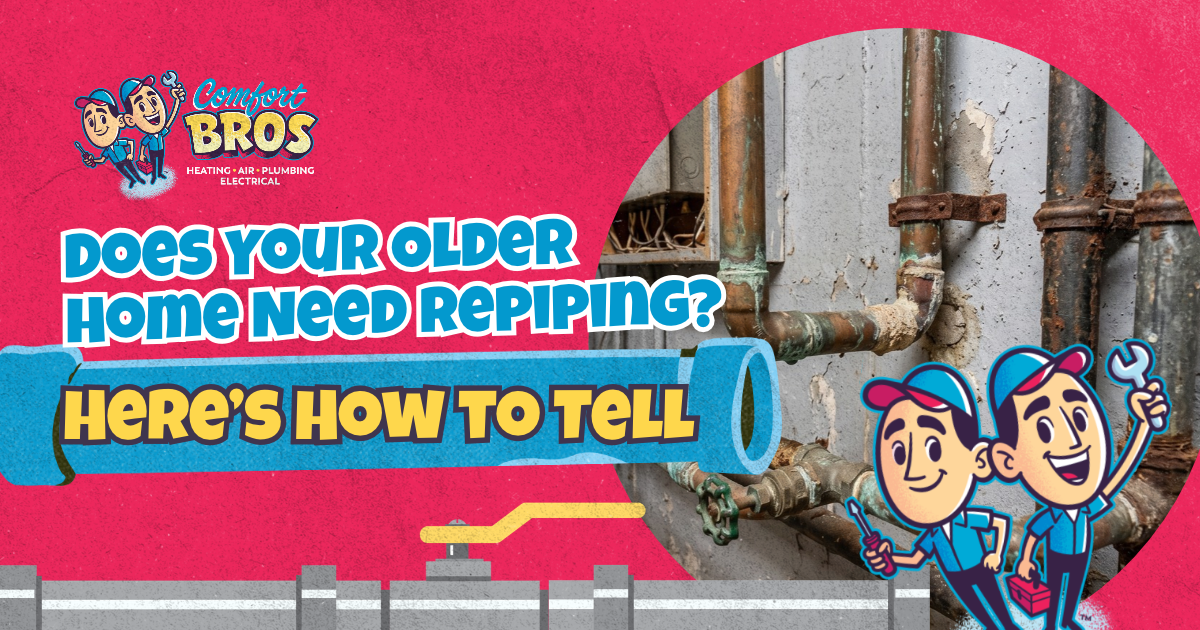
If you see green or white crust on copper pipes, flaking rust on steel, or stains and bulges around fittings, the material is likely breaking down and could start leaking. Regularly check under your sinks, in the garage, near the water heater, and along exposed outdoor lines to catch corrosion early.
Your home still has older pipe materials
Pipe materials like galvanized steel and polybutylene, commonly installed in homes built before the mid-1990s, are prone to rusting from the inside out or failing without warning. If your home has either type of system, it’s time for an inspection.
Your water bills are rising without an obvious reason
If your showers, laundry, and dishwasher use have all stayed the same but your bill keeps going up, water may be escaping somewhere you can’t see. Hidden leaks inside walls or under floors can waste water for months and cause damage you don’t notice until it’s serious.
You’re repairing plumbing problems more often
The odd plumbing problem in an older house usually isn’t cause for concern, but multiple calls every few months are a signal that your plumbing is wearing out. Recurring leak repairs or constant clogs can add up, and at some point replacing old plumbing pipes costs less than continuing to patch them.
Old Pipes vs. Failing Pipes: Age Isn’t the Only Factor
Curious how to tell if pipes need replacing? Age isn’t the only factor. Pipe material, water quality, the quality of the original installation, and past repairs all matter when deciding when to repipe a house. A home with 30-year-old polybutylene pipes may need repiping sooner than an older home with more durable copper pipes the same age.
Pipe Repair or Repiping: Which Does Your Home Need?
Knowing when pipe repair vs. repiping makes the most sense can save you money and prevent bigger problems later. Repairs are often enough when:
- The problem is limited to one leak or section of pipe.
- The rest of your plumbing is in good condition.
- Your pipes are made of a durable material and not at the end of their lifespan.
Repiping becomes worth considering when:
- Your home needs polybutylene or galvanized pipe replacement.
- Multiple warning signs are appearing at once.
- Constant repair calls are adding up.
- You’re planning a remodel and walls will already be open.
What Happens During a Whole-House Repipe?
The repiping process begins with a full-home inspection, where your plumber will assess your current pipes, their layout, and their condition. They’ll walk you through your options and recommend new piping such as PEX or copper.
On installation day, a few small access points will be cut in the drywall to reach the pipes. We’ll run new lines to each fixture, and the old pipes will be disconnected and removed where possible.
Your new plumbing system is pressure-tested for leaks before anything is closed up. If everything passes, the access openings will be patched and ready for paint.
Why Aging Pipes Can Be a Concern in San Diego County Homes
Much of San Diego County was built between the 1950s and 1980s, so many homes are reaching the age when original plumbing starts to wear out. The area’s hard water also leaves mineral buildup inside pipes that restricts flow and causes damage over time, and homes near the coast corrode faster from the salty air.
When Should You Have an Older Plumbing System Inspected?
Consider scheduling a plumbing inspection if:
- Your home is more than 40 years old.
- You’re buying or selling an older home.
- You’ve noticed any of the warning signs above.
- You’re planning a kitchen or bathroom remodel.
Pipe Repair and Repiping With Comfort Bros
If you’re noticing leaks, rusty water, or low pressure in your older home, Comfort Bros can help you figure out what’s going on. Our plumbers inspect your system and walk you through your options, whether it’s a spot repair or whole-house repipe. Contact us today to schedule an inspection anywhere in San Diego County.
Frequently Asked Questions
How long do house pipes last?
Pipe lifespan depends on the material. Galvanized steel lasts 40 to 60 years, copper can last more than 50 years, and newer materials like PEX and CPVC can last several decades.
Can I stay home during a repipe?
Most homeowners stay home during repiping projects. Water is usually only shut off while the plumbers are working, with minimal disruption to your daily routine.
How much does repiping cost?
Repiping costs depend on your home’s size, the number of fixtures, the material you choose, and how easy it is to access your pipes. We provide an upfront quote before the job begins so you know what to expect and can apply for financing if necessary.